Public restrooms are often overlooked in conversations about urban design, yet they play a vital role in health, autonomy, and dignity. New self-cleaning, sensor-enabled restrooms like those from Throne Labs and Urben Blu are redefining expectations. But are they truly accessible, safe, and equitable? And what can they teach us about designing better spaces for everyone?
Safety: Thoughtful Details That Make a Difference
Throne Labs and Urben Blu approach safety through different lenses.
Throne units include sensors that monitor occupancy, smoke, and unusual activity. Each use is limited to 10 minutes. If a user exceeds this time, the system provides a voice warning and then opens the door automatically. Alerts can also be sent to designated responders. Users who repeatedly misuse the system may be banned, though they can sometimes regain access by using a different entry method. There are no interior cameras, maintaining privacy while supporting accountability.
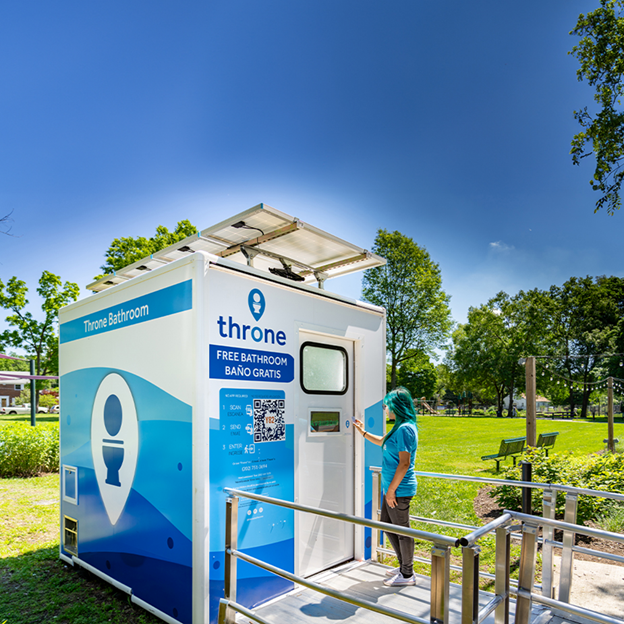
Throne Pre-Fabricated Bathroom
Urben Blu units emphasize physical safety through design and sanitation features. While they claim anti-ligature hardware, this applies only to the coat hook, which detaches under excessive weight. This safety feature may be prone to frequent breakage in high-use settings. Fixtures are tamper-resistant and built to withstand vandalism. Time limits can be customized, with a voice message prompting users to exit if they stay too long, followed by the door opening automatically. City officials can also receive an email alert.
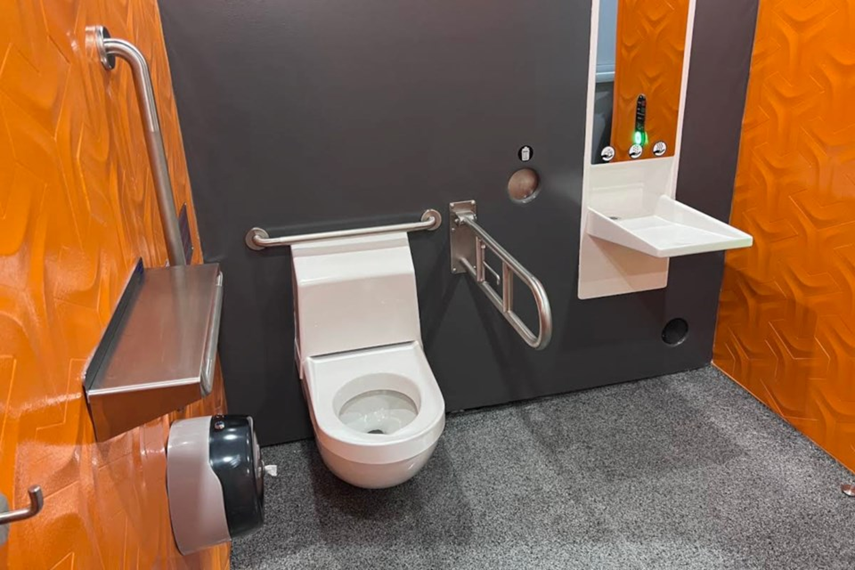
One Version of Urben Blu Bathroom Interior
Urben Blu prioritizes hygiene, with its automated cleaning schedule and fully touchless experience, including the door, soap, water, and hand dryer, all of which help reduce the spread of germs. Toilet paper is dispensed one sheet at a time and stored behind the wall, minimizing waste and contamination. However, the trash receptacle is recessed behind a flap door, which can be difficult for some users to operate and could pose a contamination risk if touched.
In both systems, cleanliness, lighting, and a sense of control contribute to perceived safety. These elements matter just as much as locking mechanisms when encouraging public use.
Accessibility and Equity: Designed for Inclusion, With Limits
Both Throne Labs and Urben Blu offer gender-inclusive, single-occupancy restrooms that prioritize comfort and privacy. These units are designed to support users who may need assistance or prefer a private space, which is especially important in public settings where traditional restrooms often lack accommodations for caregivers or people with sensory sensitivities.
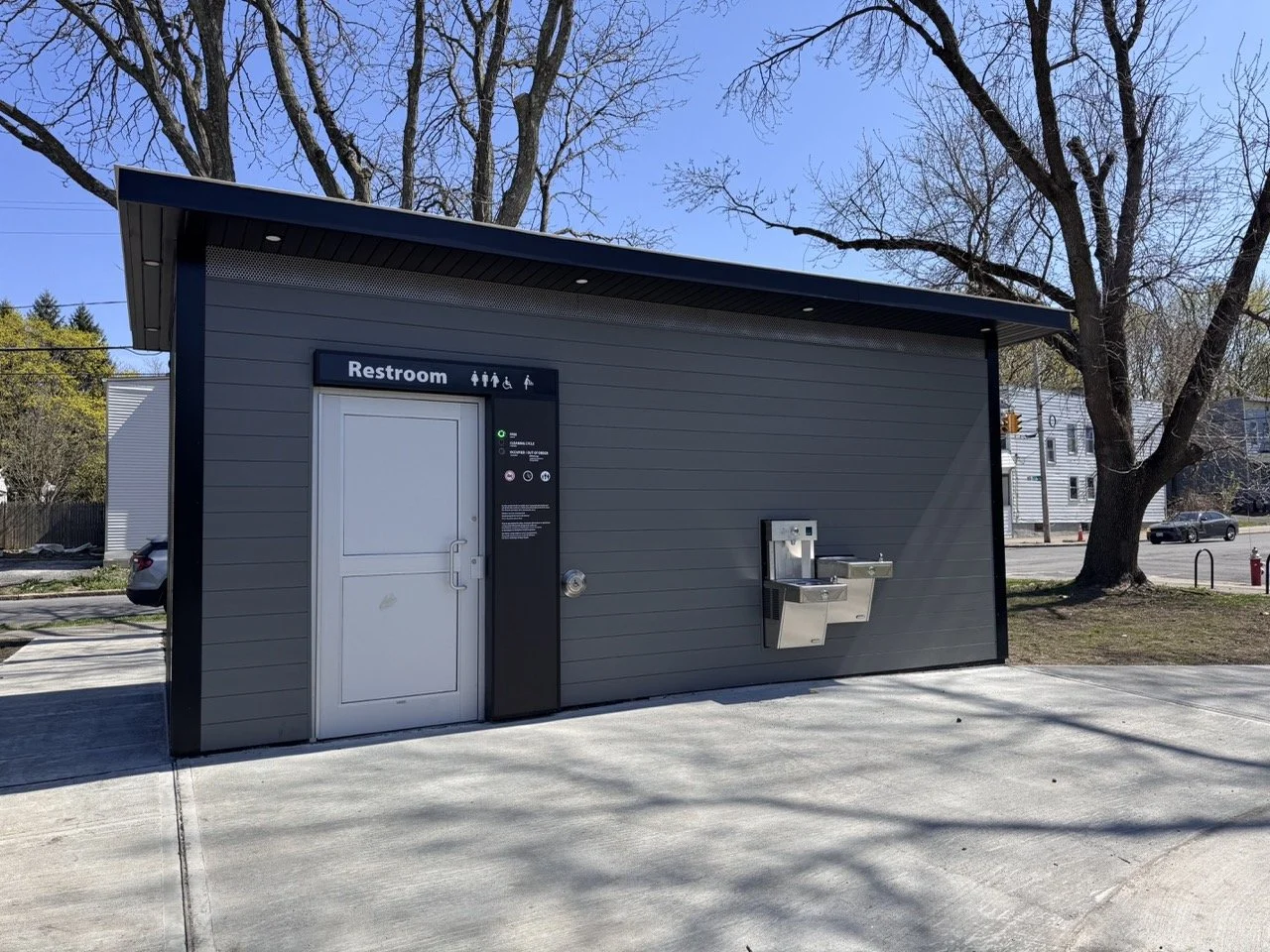
Urben Blu Prefabricated Bathroom
Urben Blu units are fully ADA-compliant, with level entries, wide doors, grab bars, Braille signage, and space for mobility devices. They also offer optional features such as adult changing tables, exterior water fountains, and showers. Throne Labs offers ADA-compliant models as well, but not all of their units are accessible. Some have steps, limiting use for individuals with mobility challenges.
Both companies provide optional features such as needle disposal units and free menstrual products.
However, accessibility also depends on how users interact with the technology. Throne units require either a cell phone or key card to unlock, which may create barriers for individuals without reliable technology or those who need immediate access. Urben Blu units do not require digital access to enter, offering a more straightforward experience. Still, both systems rely on automation and connectivity. A glitch, app issue, or power failure could prevent entry, creating unnecessary stress in an already urgent situation, especially compared to traditional restrooms that typically remain open unless physically locked or out of order.
Smart restrooms may appear to be a technical fix, but they prompt deeper human questions. Who gets access? Are units placed where they are most needed? Are they designed to support people experiencing homelessness, delivery workers, tourists, and others who depend on public infrastructure?
Throne and Urben Blu demonstrate thoughtful approaches to inclusive design. But true equity requires more than meeting physical standards. It means removing social and technological barriers, such as distributing access cards through local agencies, offering clear multilingual instructions, or avoiding gatekeeping systems entirely.
Public restrooms are essential infrastructure. They support mobility, health, and dignity. As cities and private organizations adopt new models, equity must remain at the center of the conversation.
Cleaning and Maintenance: Service Versus Self-Cleaning
Throne operates on a full-service model. Cities or clients lease the units, and Throne handles cleaning, stocking, remote monitoring, and repairs. Sensors track real-time usage, allowing for dispatch only when needed, maximizing efficiency while ensuring high standards.
Urben Blu units are self-cleaning, with automated disinfection after each use. The toilet seat is cleaned and dried in just 45 seconds, ensuring a sanitary experience for every user. Surfaces are made from antimicrobial and graffiti-resistant materials. Long-term upkeep falls to the property owner or municipality. Watch how Urben Blu self cleaning works: Urben Blu Self-Cleaning Functions
For clients without maintenance teams, Throne offers turnkey convenience. For permanent installations, Urben Blu’s low-maintenance system may offer long-term cost savings.
What Makes a Bathroom Smart?
Both companies use sensors and real-time data to improve operations. These smart features can support faster response times, better planning, and more reliable public amenities.
Throne Labs tracks occupancy, usage frequency, session length, smoke, temperature, and water levels. This data helps optimize cleaning schedules, monitor units remotely, and provide anonymized reports to guide placement and planning.
Urben Blu automates cleaning cycles and detects issues like equipment failure or supply shortages. Usage and performance data help facility managers make informed decisions about staffing, repairs, and resource allocation.
Cost, Flexibility, and Ownership
Throne units are solar-powered and self-contained. They require no utility hookups and can be installed quickly or relocated as needed. Their pricing includes maintenance and support, making them suitable for flexible deployment in high-traffic or underserved areas.
Urben Blu units are fixed installations requiring utility connections. Their upfront cost is higher, but the long lifespan and low daily maintenance make them a practical option for cities with infrastructure and on-site teams.
Final Thoughts
Access to public restrooms is a basic human need and essential to health, dignity, and full participation in community life. It is encouraging to see companies like Throne Labs and Urben Blu reimagining what is possible. By focusing on cleanliness, safety, accessibility, and sustainability, these innovations move us closer to restrooms that truly serve the public, not just some of us, but all of us.
