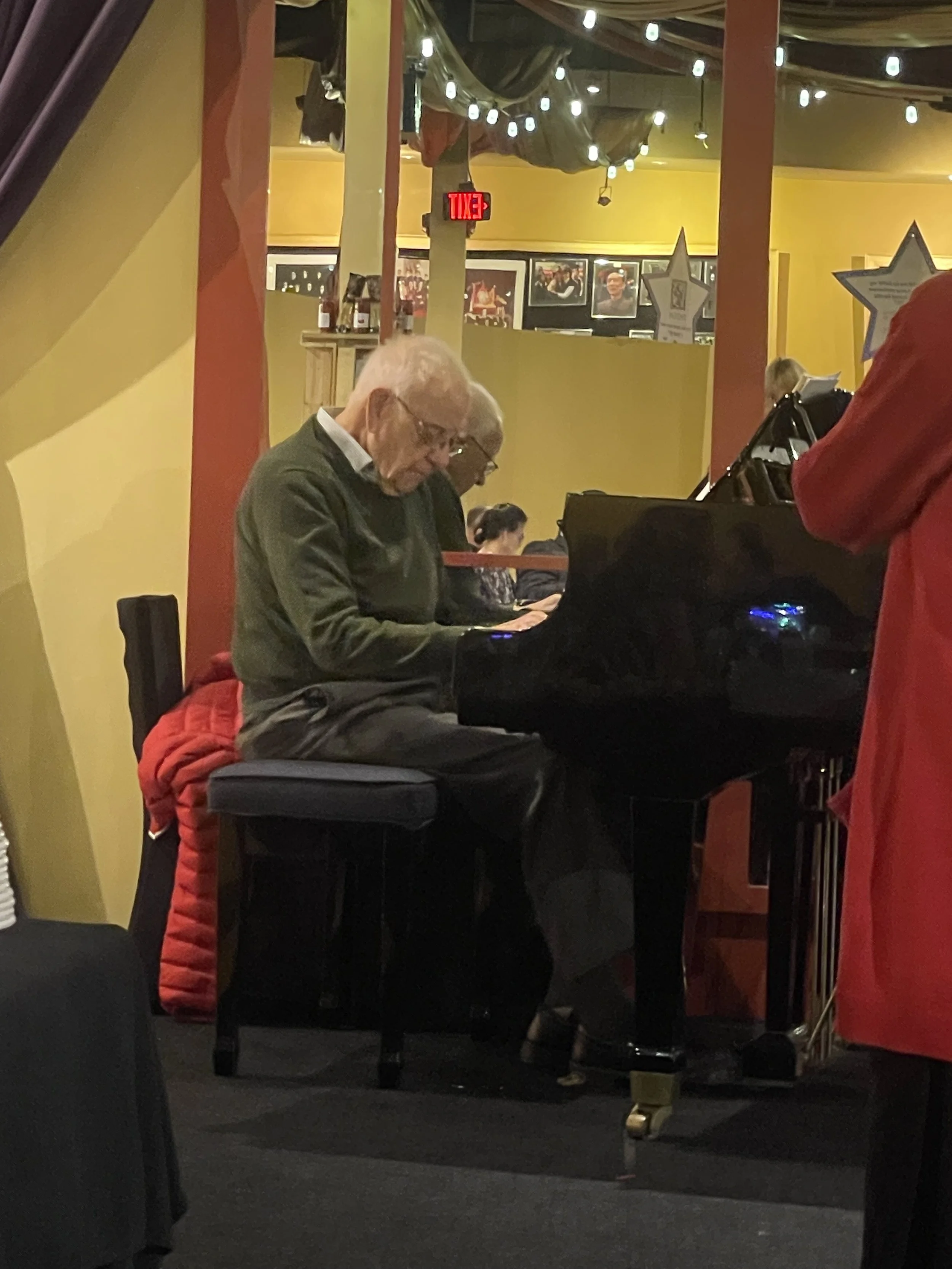
Sharing his music as a volunteer pianist, my Dad brings comfort and joy to others while staying connected to his purpose and community.
From Safety to Meaning: A New Way to Think About Aging-in-Place
For years, the phrase aging-in-place has been associated with safety, accessibility, and independence. Grab bars, ramps, and walk-in showers have become symbols of readiness for later life. These elements matter, but they only address the physical side of what it means to remain at home as we age.
Lately, I have been exploring a framework that shifts the conversation from safety alone to something deeper: Sense of Coherence. Developed by medical sociologist Aaron Antonovsky, this concept explains why some people stay well even in the face of challenges. He found that those who experience their world as comprehensible, manageable, and meaningful are more resilient and maintain better health.
These same principles can transform how we think about the homes we live in.
Comprehensible spaces
A comprehensible home is one that makes sense. The layout feels intuitive. Light levels and organization support clarity. People can move through daily life without confusion or frustration. As cognition or mobility changes, a comprehensible home reduces stress and helps its residents feel capable and oriented.
Manageable spaces
Manageability is about the relationship between what is demanded of us and the resources we have to meet those demands. A manageable home fits our energy and abilities. It supports daily living through thoughtful design choices such as lever handles, accessible storage, and spaces that are easy to clean and maintain. When the environment works with us rather than against us, independence becomes more sustainable.
Meaningful spaces
Meaning is what connects people emotionally to where they live. It can come from familiar views, a favorite chair by the window, or the freedom to continue long-standing routines. A meaningful home allows us to feel rooted, to express who we are, and to maintain a sense of purpose through change.
My Dad’s Home: A Case Study in Sense of Coherence
The experience I had helping my dad adapt his home is a good example of how Sense of Coherence can guide small but powerful adjustments. Dad has lived in the same multi-level home for over fifty years. Since my mom passed away two years ago, he continues to live there alone. The house holds decades of memories, reminders of family life and my mom’s personal touch. My mom was the one who kept the home tidy and ready for visitors, but those are not my dad’s priorities. He values staying busy and mentally engaged more than maintaining order or appearance.
At 87, Dad is very active and loves engaging with his neighbors and people in his community. Yard maintenance is a chore, but it keeps him moving and connects him with his neighbors. They look out for him, which gives me peace of mind, since I live far away.
After my mom died, my dad moved his computer from the basement to the dining room table and placed his piano in the middle of the room where it was convenient to reach. Playing the piano is one of his greatest joys. He volunteers as a pianist at the local hospital and a nearby long-term care home, and at home he uses his computer to look up songs to add to his repertoire. Having his piano close by makes it easy for him to stay engaged in something he loves. He prefers not to face a wall while playing, so he set up the piano in the center of the room. Over time, though, cords from the computer, printer, and electric piano became trip hazards and blocked the path to the bay window where he often stands to look out at the yard.
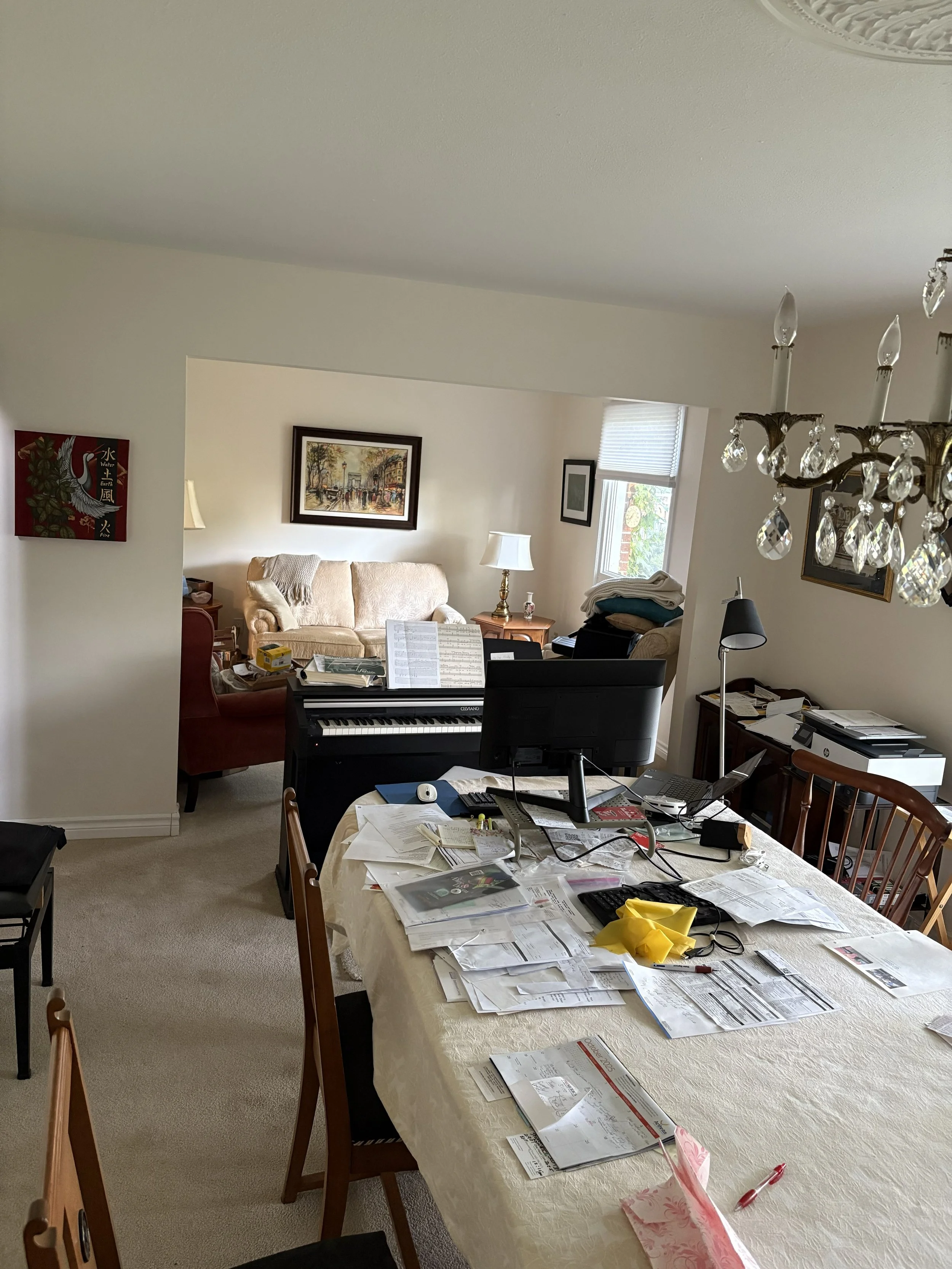
Before Image:
Dining room doubling as workspace and music area, with cords and furniture creating clutter and trip hazards.
Together, and with some compromise, we reorganized the space to make it more comprehensible, manageable, and meaningful.
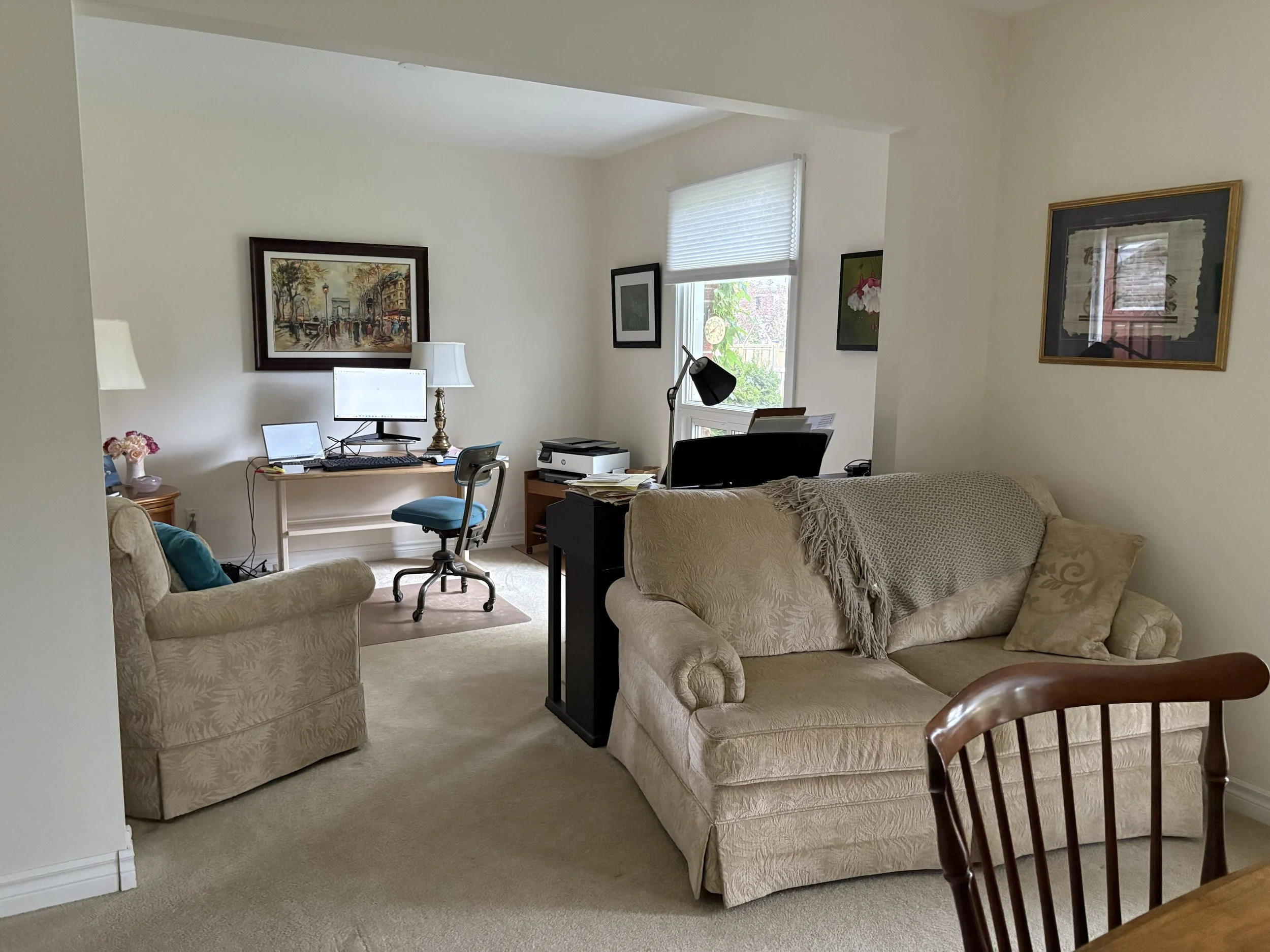
After Image:
Space reconfigured to create a dedicated office while keeping the piano within reach, improving flow, and reducing trip hazards.
Comprehensibility came from dedicating the adjacent sitting room as a true office. We arranged it so Dad’s desk, computer, and printer are closer together, giving the room a clear purpose and a sense of order. It now looks and functions like a workspace, separate from where he eats or entertains. Manageability improved as we moved the piano behind the sofa, clearing walking paths and reducing trip hazards. The flow between rooms is smoother, and he no longer needs to move equipment or cables to use the dining table for family gatherings or projects. This arrangement also supports meaningfulness. Dad can play the piano without facing a wall, staying oriented toward the light and view of the yard, and feeling connected to the spaces he loves.
Beyond practicality, this new layout still allows Dad to enjoy his music, pursue hobbies, and gather with family. The room also suits his other favorite pastime—napping. Dad has an unusual way of folding himself into a chair for a quick rest, and keeping the furniture arrangement comfortable for his midday snoozes felt like an important detail. It is, after all, his way of relaxing and recharging in a space that feels like his own.
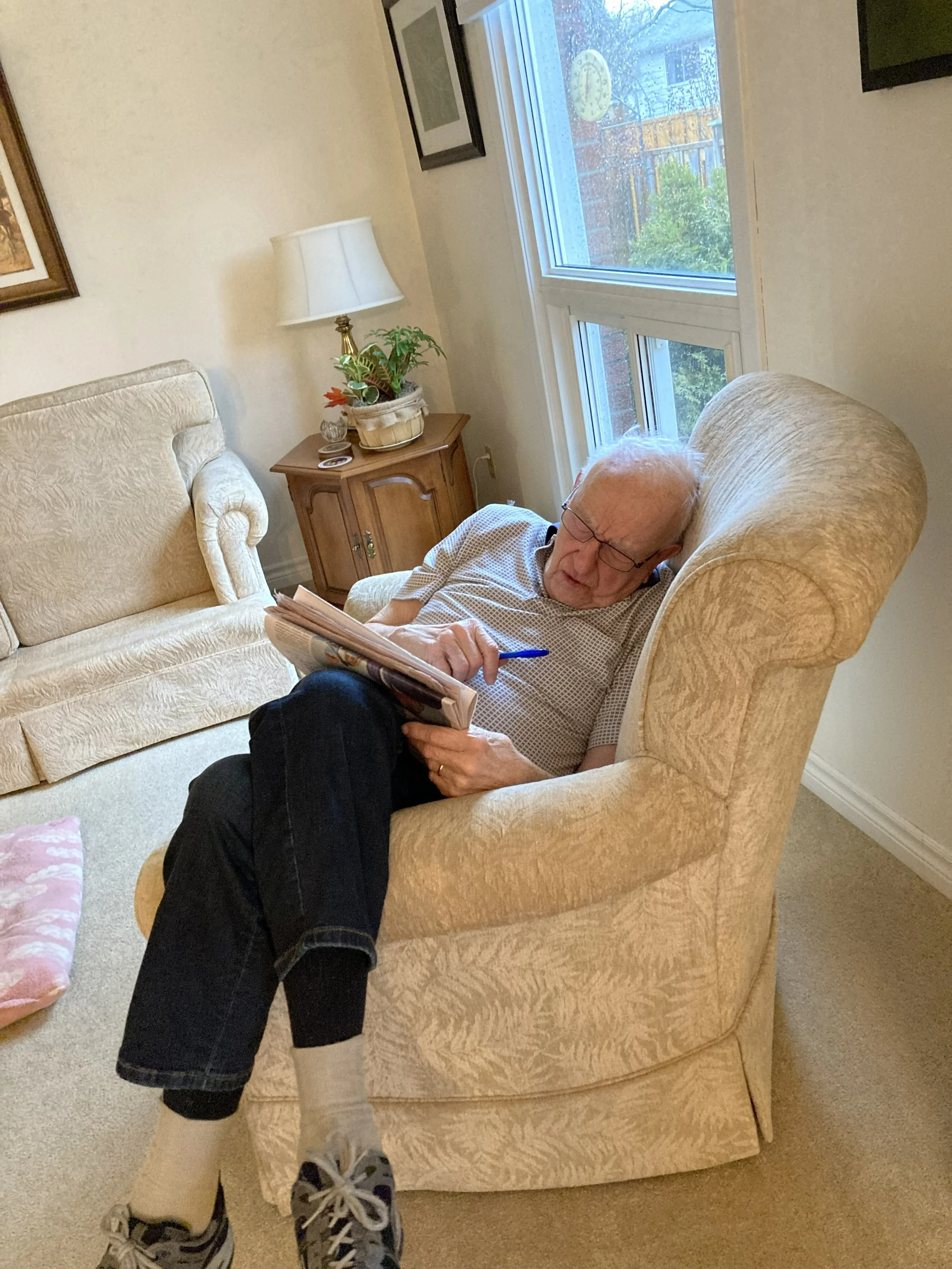
Image of Dad napping in one of his favorite chairs
His home still lacks most aging-in-place amenities, such as a barrier-free entry, a bedroom, and a full bath on the main floor. For now, the stairs give him exercise, but they are a worry. If his mobility becomes impaired, the home will no longer work for him. Yet moving now would truly rock his world. While we might improve manageability by relocating him to a more accessible environment, comprehensibility would likely drop as he adjusted to an unfamiliar setting, and the connection to all that matters to him would be severed.
There are also subtle signs of cognitive decline. Research shows that relocation can be a significant stressor for older adults, often referred to as relocation stress syndrome. Studies have linked relocation to increased rates of depression, anxiety, and declines in physical and cognitive well-being, particularly in the first months following a move.¹ For older adults with dementia, one scoping review found that relocation was commonly associated with declines in physical, mental, behavioral, and functional health outcomes.² Even among cognitively intact older adults, recent movers report greater depression and stress compared to long-term residents.³ From a salutogenic perspective, as Golembiewski notes, improving manageability may sometimes come at the cost of comprehensibility and meaningfulness, the very resources that sustain well-being over time.⁴
Beyond the Safety Checklist
Professionals who specialize in aging-in-place often rely on safety assessments and accessibility checklists. These tools are valuable, but they capture only part of the story. A truly supportive home must also make sense to the person living there, feel manageable day to day, and hold personal meaning.
As specialists, designers, and healthcare professionals, we have an opportunity to look beyond what prevents harm and toward what promotes well-being. The Sense of Coherence framework offers a lens for this broader view. It reminds us that thriving at home involves more than remaining safe; it depends on feeling confident, capable, and connected to the life that home represents.
A More Human Vision of Aging-in-Place
Many older adults are not simply trying to stay home. They are trying to stay themselves. A home that supports a strong sense of coherence allows them to do that. It turns aging-in-place from a checklist into a living experience of comfort, clarity, and meaning.
When we expand our focus from safety to coherence, we begin to design not just for longevity but for the quality of life that makes longevity worthwhile.
If you would like to explore how Sense of Coherence can guide an aging-in-place design or would like a salutogenic home assessment, feel free to reach out. I’d love to help you create a home that supports health, independence, and meaning over time.
References
Costlow, Carley E., and Patricia A. Parmelee. “The Impact of Relocation Stress on Cognitively Impaired and Cognitively Unimpaired Long-Term Care Residents.” Gerontology and Geriatric Medicine 6 (2020): 1–8. https://www.tandfonline.com/doi/full/10.1080/13607863.2019.1660855
Ryman, Frida V., Maria M. Kirk, Natalie J. Parker, and Martin R. N. Christensen. “Health Effects of the Relocation of Patients With Dementia: A Scoping Review to Inform Medical and Policy Decision-Making.” Health Services Insights 12 (2019): 1–10. https://academic.oup.com/gerontologist/article-abstract/59/6/e674/4989882?
Wu, Shu-Chuan, and Jian-Rong Rong. “Relocation Experiences of the Elderly to a Long-Term Care Facility in Taiwan: A Qualitative Study.” BMC Geriatrics 20, no. 1 (2020): 172. https://bmcgeriatr.biomedcentral.com/articles/10.1186/s12877-020-01679-5?
Jan A. Golembiewski, “Salutogenic Architecture,” in The Handbook of Salutogenesis, ed. M. Mittelmark et al. (Cham: Springer, 2022), 268. https://www.ncbi.nlm.nih.gov/books/NBK584090/?
